BLOG

Women's Day: Yet another perspective revamped!
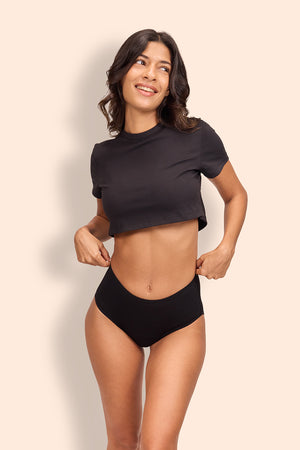
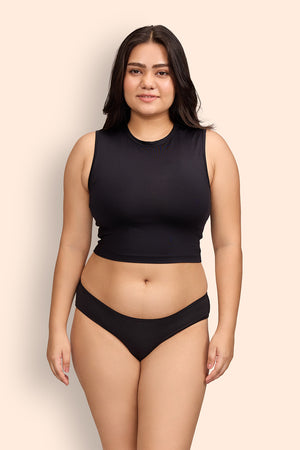
I have to admit, I’ve always questioned the purpose of Women’s Day. Being a feminist, I thought women’s day was counterproductive, and that it actually victimized women and gave society a reason to remember the inferior position of women throughout history. However, given this year is my baby Nushu’s first Women’s Day, my team and I sat down (2 days ago - lol) to discuss content, and that forced me to reevaluate what women’s day means for: Nushu as a brand Society Me as a woman Are we close to providing women across societal constraints, equitable opportunities? Have we reached a point where women are truly free in society? Are we ready to celebrate that yet? My answer to all the above is no. However… I didn’t want to do a women’s day push without believing in it. I’d like to share my new found perspective on women’s day with you, in case it may resonate… Women’s day is… A day to commemorate how far women have come along in history despite the odds. An opportunity to get inspired by all the amazing women who have fought for women’s rights throughout history. An indicator that we all have a role to play in advancing the position of women in society today. A reminder that other women have your back too! A whole lotta hope for the future <3 I hope you too will find the true meaning of what Women’s Day means to you. Also, it’s not Valentine's day, so thanks but no thanks to the flowers…get them Nushu period underwear instead ;)
Learn more
Flowing with the Phases: A Guide to Menstrual Moods and Feelings
As women, we’re intimately familiar with the rollercoaster of emotions that can accompany our monthly cycles. You know the feeling—those days when simple tasks and interactions with others start to trigger a little extra and your once-vibrant life suddenly appears dull and doomed. The truth is, you’re not alone in this journey. While premenstrual syndrome (PMS) is a term that’s often thrown around, what many of us fail to realise is that our hormones don’t just influence our moods during PMS; they play a significant role in shaping our emotions and actions throughout the entire month. Cycle syncing is a forgotten but powerful lifestyle tool that can help us better manage our energy, fostering greater inner kindness and self-respect. By changing the way we approach our periods, we can establish a deeper connection with our bodies. Let’s delve into the intricacies of this fascinating journey. The Menstruation Phase: When You Just Let It Flow The journey begins with the arrival of your period—the menstruation phase. It’s a time when your hormone levels are at their lowest, and your energy might take a dip. Don’t fret; it’s perfectly normal to feel tired and in need of some rest. This is your cue to be gentle with yourself. Cosy up with something warm, indulge in heartwarming activities, and allow yourself to relax. And here’s a little secret to make this phase more comfortable and enjoyable: consider using Nushu reusable period underwear. Its elegant lace styles transform period management into a holistic, ritualistic experience that helps you embrace the beauty of this phase. The Follicular Phase: When Everything’s Going Right The follicular phase is the mood-enhancing segment of your menstrual cycle. It kicks off on the first day of your period and lasts for approximately 7 to 10 days. During this time, you’re likely to experience a lighter mood, heightened energy levels, and an overall positive outlook on life compared to the latter part of the month. You might even notice an increase in your libido, which is perfectly natural. As oestrogen levels rise after the start of your period, so do serotonin levels—bringing forth a happier, more productive you. It’s a time when you can harness your positive energy and tackle life with enthusiasm. The Ovulatory Phase: When Things Start to Get Hot Ovulation, the release of an egg from the ovary, typically occurs midway through your cycle—precisely when your body is primed for potential pregnancy. Increased libido is common during this phase, as is heightened pain tolerance. Interestingly, research suggests you might be more inclined to buy clothes, makeup, and other items to boost your self-perceived attractiveness during this time. It’s a phase when you radiate confidence and allure. The Luteal Phase: When Nothing’s Quite Right This phase is where your body realises it’s not pregnant once again, and it can act up a bit. Progesterone levels rise, leading to moodiness, irritability, and increased susceptibility to sadness. Embarrassing and melancholic memories might resurface, people who pleased you a week ago suddenly become annoying, and a general cloud of dullness hovers over you. But remember, you’ve got this—hang in there! To fully embrace the power of our menstrual cycles, we need to change how we perceive them. It’s time to embrace our periods rather than merely disposing of them month after month. This is where Nushu reusable period panties come in—a liberating period management product. These panties are crafted from premium bamboo fabric, cradling your body with gentle comfort. Their high absorbency frees you from mid-day changes, and washing and reusing them becomes a special ritual during that time of the month. It’s an opportunity to forge a deeper connection with your body and a more profound understanding of your monthly rhythms. In conclusion, our menstrual cycles are not something to be feared or endured. They are a source of wisdom and self-awareness, offering us the chance to align with our natural rhythms and nurture our physical and emotional well-being. So, let’s flow with the phases, embracing our menstrual moods and feelings, and celebrating the beautiful complexity of being a woman.a
Learn more
A Beginner’s Guide to Using Period Underwear
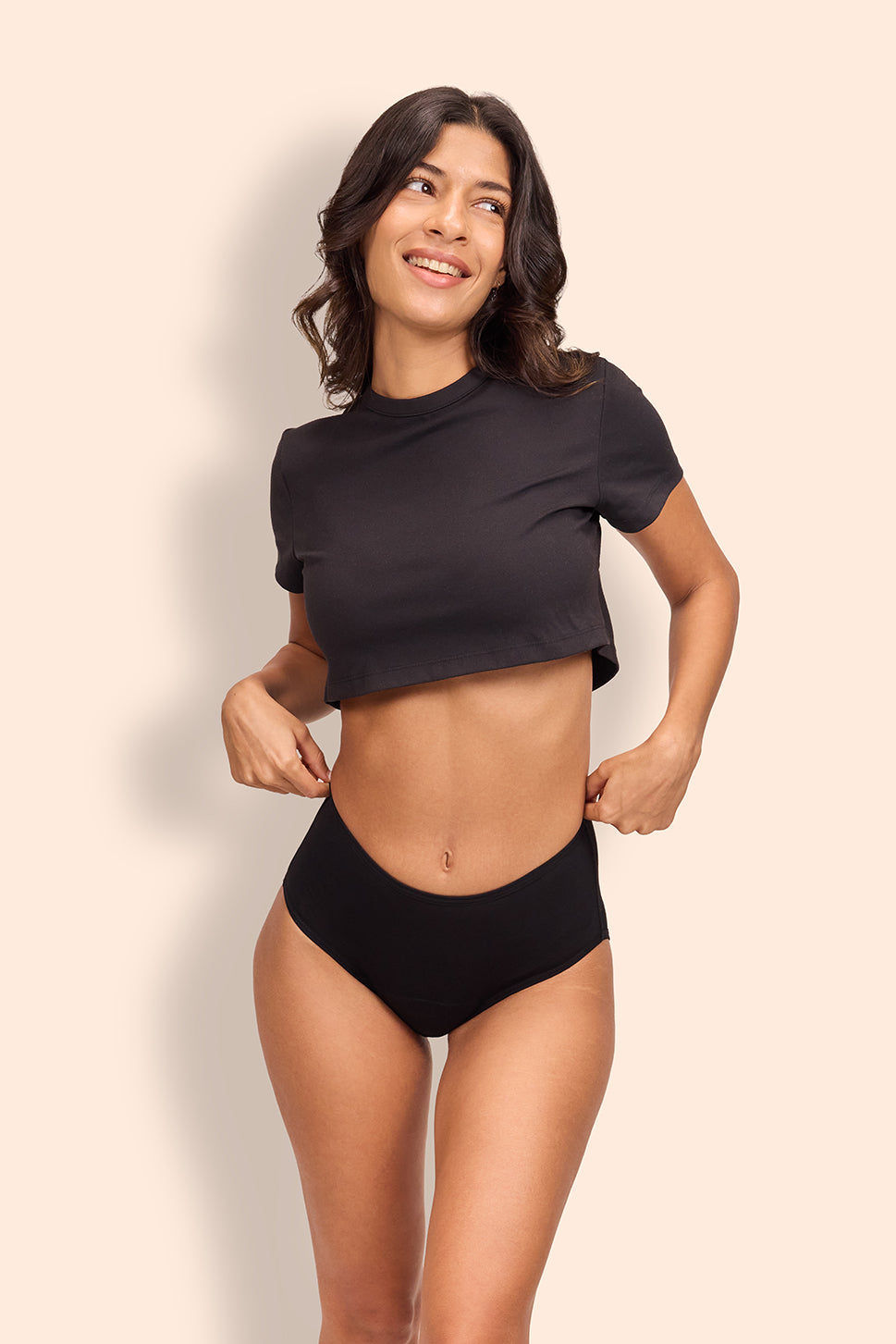
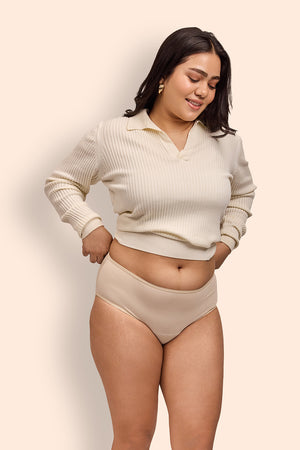
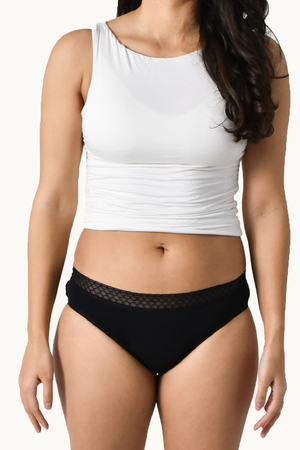
In a world where innovation meets necessity, menstrual hygiene products have become progressive. One such innovation that is going to make your cycle comfortable is a period panty, that can absorb up to 6 pads worth of blood. Want to know how to keep the annoying pads and tampons at bay? Read along. So, you’re curious about using period panties, but aren't sure if it’ll work, right? Not to worry. We were in your shoes and remember being equally curious and cautious when we first heard about this concept. How to use Period Panties Step 1 Choose your styles according to your flow. Nushu period panties come in five styles and three levels of absorbency - super heavy, heavy, and medium, with the following absorption capacities: We suggest buying a mix of our styles so that you are sorted for your entire cycle. Here’s how you can choose: Super heavy - for your heaviest days Heavy - for your milder days Medium - for your light days For example, if your heaviest is day 1 & 2, with a lighter flow by day 3 & 4 while you reach the tail end at day 5 & 6 with a light flow, we would suggest something like this: During your heavier days you may want to change into a fresh period panty in the evening if you feel the need to. Our 5 styles are designed to accommodate each day of your flow, so our Fantastic Five Combo is a great buy to experience our versatile style range, tailor-made for every level of absorbency. Step 2 Receive your Nushu period underwear, and wait for your cycle! If you use panty liners a few days before your period, you can now use Nushu Cheeky Lace! It's so thin it will feel just like your normal underwear! When your period starts, choose which Nushu underwear to wear according to your flow. Wear it all day, we promise you won't leak! In the evening, if you feel the need, you can change into a fresh period panty, but it’s not mandatory, as our underwear can be worn for up to 24 hours if you feel comfortable. *Please note, if you bleed extra heavy at night, make sure you wear our Lace Bikini or Hip Hugger to bed as it has extended padding. It will keep you protected as you enjoy your beauty sleep! Step 3 Once you remove the underwear, you can rinse it under running water in the sink to get all the blood out. Follow up with hand wash or machine wash with any detergent of your choice, and then leave to hang dry (don’t put in the drying machine). The underwear will take 8-10 hours to dry, so make sure you have at least 3 pairs to keep a smooth rotation going Repeat and Re-use. Experience period freedom, like never before! If we haven’t answered your questions or you’re still confused – contact us through WhatsApp and we will be happy to assist with all your queries! Love, Team Nushu
Learn more
Moon and Menstruation: A ‘Lunatic’ Belief or Powerful Connection?
Humans have always, in some form or the other, believed that the moon influences their health in ways even science cannot prove. The connection between the menstrual cycle and the lunar cycle can be found in early folklore and medicines, contemporary accounts of full moons and modern spirituality. While many scientific studies rebuke the hypothesis, the general public remains fascinated by the idea that menstruation and the moon may be linked. Why, you wonder? Let’s decode. To start off, etymologically at least the connection is clear and indubitable: the root word for ‘menstruation’ comes from the Greek word for Moon – ‘mene’ – and the Latin for month – ‘mensis’. But historically? There’s much to learn. From sleep trouble, violent behaviour, mental health to menstrual cycles, several aspects of our health have at one time or another been associated with the Moon. And it all started centuries ago. Ancient cultures, such as the Indians and Greeks, believed that the feminine energy is at the height of its power when the menstrual phases and the lunar cycle are linked. A full lunar cycle lasts from one new moon to the next and takes 29.5 days. The average menstrual cycle is also around 28–29 days long - the math is simple, go figure?! Considering this, it doesn't come as a surprise that our ancestors channelled their energies to build a deeper relationship with their bodies, minds and spirits with the help of lunar cycles. And of course, scientifically, the connection is more dubious… There’s no scientific evidence that a synced cycle with the moon is of any benefit, but folklore and alternative health advocates have persistently – and surprisingly – believed that there are benefits to menstruating during the new moon and ovulating during the full moon. And it’s not just them – the first one to suggest a connection between the two cycles was none other than the most revered man in the study of science, Charles Darwin. Since then, several researches and surveys have been done which rebuke the hypothesis as a mere coincidence. However, some believe that connection has been disrupted owing to our modern lifestyle and artificial lights. The moon’s effect on us and nature is powerful, and it wouldn’t be completely ‘lunatic’ to think that even our periods are a phenomena connected to the moon. Which is also why some people with periods try to sync their cycle to the moon. Here’s why you might want to consider it too, even if you aren’t convinced by the science: It will make you more aware of the moon and its phases. You can learn to direct your energy in specific ways throughout the lunar cycle and your menstrual cycle. Focus on building better habits such as sleeping without digital light in your room. Choose reflective and inward-looking activities during the new moon, and more social, connective activities during the full moon. Make your home a sanctuary and ground inward during the new moon. This was just a gist, there’s lots more to be understood and practised about the two cycles. Start with a few readings and then don’t forget to reflect. See you another time. Sources: https://helloclue.com/articles/cycle-a-z/myth-moon-phases-menstruation https://www.healthline.com/health/womens-health/menstrual-cycle-and-the-moon#takeaway https://pubmed.ncbi.nlm.nih.gov/16407788/#:~:text=The%20lunar%20cycle%20has%20an,correlate%20with%20the%20menstrual%20cycle. https://flo.health/menstrual-cycle/health/period/menstrual-cycle-and-moon
Learn more
Temple Taboos on Periods: Are We Sticking To Obsolete Rituals and Beliefs?
Tucked away in Kerala, the Sabarimala Temple has been a revered place of worship for hundreds of years. Recently though, it has also become a hot-topic for discussions around menstruation and feminism. Dedicated to Lord Ayappa, an eternally celibate God, the temple is only for men, disallowing any menstruating women (women between the age of 13-50) from entering the temple. In 2018, the Indian supreme court had overturned this centuries-old ban. Yet, none had been able to enter since, even with the support of Kerala’s state government and police. Those that tried were stopped, shoved and stoned by mobs of men. This sparked a row of protests, including one where over five million women lined up across the length of Kerala, a state in southwest India. Side by side, these women formed a wall stretching 620 kilometres. The case of Sabarimala Temple presents a truth that we must deal with in order to understand temple taboos on periods in India – it does not take long for rituals and beliefs to become taboos, and not all menstruation beliefs are misogynistic. Periods have always been considered divine in Indian culture. Many Hindus believe menstruating women are so pure that they’re ‘worshipped’ as a ‘living goddess’ during that time of the month. So why aren’t they allowed in temples or kitchens? Imagine the world about 500-600 years ago when women spent most of their days doing household chores, farming, worshipping and taking care of the family. The menstrual cycle was considered a divine experience for the woman, when her spiritual energies were high but her physical being needed rest. It was even believed that a menstruating woman cannot enter a temple as her energy will attract that of the murti (idol), and the murti will become lifeless. Some also believe that a woman’s energy moves downwards during menstruation, whereas energy moves upwards in a Hindu place of worship. This was also a time when people lived in forests and villages where wild animal attacks were common. Women were often asked to stay indoors and not visit temples (the most common activity that required venturing out of the house) as the smell of blood attracted animals and made them more susceptible to attacks. They could, however, pray to God, chant or meditate in their own space. With the physical body demanding more rest, women were also restricted from cooking or cleaning in the kitchen. Household chores took most of their time and energy with no days off and periods allowed for every woman to rest and recuperate during these 5 days. Sounds logical, right? So how did these logical practices turn into taboos? The answer is simple: practices that were meant to protect women began to restrict and reprimand them as people started to adopt them without knowing their significance, and when in changing times, we still stuck to age-old beliefs. The world has changed from what it was. Women no longer spend most of their time doing physical work in farms or kitchens. They may engage more in mentally strenuous activities. There are no wild animals sniffing off blood when they head out to work or to temples. Some of our practices and rituals around menstruation are nothing but a hangover of the past, a bad habit that we are not able to let go. No scripture, vedas or religious texts propose that women cannot pray on their periods, that they are impure, or that they simply cannot enter a temple or a place of worship. The idea of segregation, avoiding sex or contact, and taking ritual ‘purification’ baths are not religious customs but a result of patriarchal discomfort. When sanitary pads or tampons were not used, the sight of blood dripping from a woman’s body was discomforting for most. Over time, various spiritual and occult meanings have been given to menstruation, giving rise to menstruation taboos. It’s time we shun some bad habits and beliefs and make way for a brighter future.
Learn more
The Female Hormones You Need To Know
One of the great mysteries of our bodies, hormones are responsible for a lot more than we give them credit (or blame!) for. We’ve all been told that they’re important, we might even know a few of the hormones that affect us, but we are often not sure what they do or how they impact health and wellness. Hormones are the body's messengers, produced in the endocrine system. They are secreted into the blood and carry vital information to organs and tissues. Put simply, when the hormones are out of whack, so are you. Now, let’s learn a bit more about what these female hormones are and how they affect your mind and body. Estrogen The primary female hormone, estrogen, is produced mainly in the ovaries. It is responsible for functions like ovulation, menstruation, breast development, and increasing bone and cartilage density. In the brain, it boosts the function of neurotransmitters that affect sleep, mood, memory, libido, and cognitive factors such as learning and attention span. On the other hand, it reduces the perception of pain, preserves bone mass, and increases HDL – the good cholesterol. When in excess, it can cause depression, weight gain, headaches, low sex drive, anxiety, sleep trouble, and menstrual problems. Too little of it can be responsible for menstrual problems, fertility issues, and mood disorders. Progesterone Like estrogen, progesterone is majorly associated with the female reproductive organ. It helps prepare the uterus for pregnancy and helps stabilize menstrual cycles. Levels of this hormone affect how regular your periods are, your mood and sleep cycle. Low progesterone levels can cause heavy or irregular menstrual periods and fertility problems. If progesterone levels drop during pregnancy – meaning your uterus is not prepared enough for the egg – it can cause premature labor or miscarriage. Progesterone deficiency can cause vaginal dryness, depression, insomnia, yeast infections, hair loss and more. Testosterone Predominantly a male hormone, it affects women’s health as well and is one of the principal androgens (types of male reproduction hormones) present in the body. This hormone contributes to sex drive, fat distribution, muscle strength, bone mass, and red blood cell production in both men and women. Women who have too much testosterone may have thinning hair on their heads, excess body hair, facial hair, acne, more body fat, low libido, and smaller breasts. Having high testosterone can also cause irregular periods and contribute to fertility problems. Human Chorionic Gonadotropin (HCG) Also known as the pregnancy hormone, HCG is yet another hormone that is produced naturally in women. It’s produced by the placenta during pregnancy and is found in the urine or blood around 10 to 11 days after conception (when a sperm fertilizes an egg). Hence, testing for HCG in blood or urine is a way to determine if you’re pregnant! They also affect your mood during this time by making you irritable, restless or anxious. Follicle-Stimulating Hormone (FSH) The Follicle-Stimulating Hormone is produced by the pituitary gland, in both men and women and regulates the functions of both the ovaries and testes. It plays an important role in sexual development and functioning. FSH helps control the menstrual cycle in women and stimulates the growth of eggs in the ovaries. Throughout the course of the menstrual cycle, the FSH levels change and it's the highest during ovulation. Lack or low levels of it can cause loss of fertility and poor ovarian functions. Luteinizing Hormone (LH) Released in the pituitary gland, LH has different roles in the two halves of the menstrual cycle. In weeks 1-2 of the cycle, it stimulates the ovarian follicles to produce the female sex hormone, oestradiol. Around day 14 of the cycle, a surge in luteinising hormone levels causes the ovarian follicle to rupture and release a mature oocyte (egg) from the ovary, a process called ovulation. If a woman conceives, LH also supports the early stages of pregnancy. High levels of LH can result in PCOS and low levels can cause irregular periods or difficulty in ovulation. Prolactin Another product of the pituitary gland, prolactin’s main jobs are to govern egg release and stimulate breast-milk production in new moms. Although rare without pregnancy, high levels of prolactin can reduce sex drive and even bring on menopause-like symptoms. Post-childbirth, normal levels can help you reduce weight faster as well. Besides these, there are other hormones that affect your body and mind like cortisol, Dehydroepiandrosterone (DHEA), adrenaline and more. A quick call with a doctor or research on the internet can help you discover more about yourself!
Learn more