BLOG
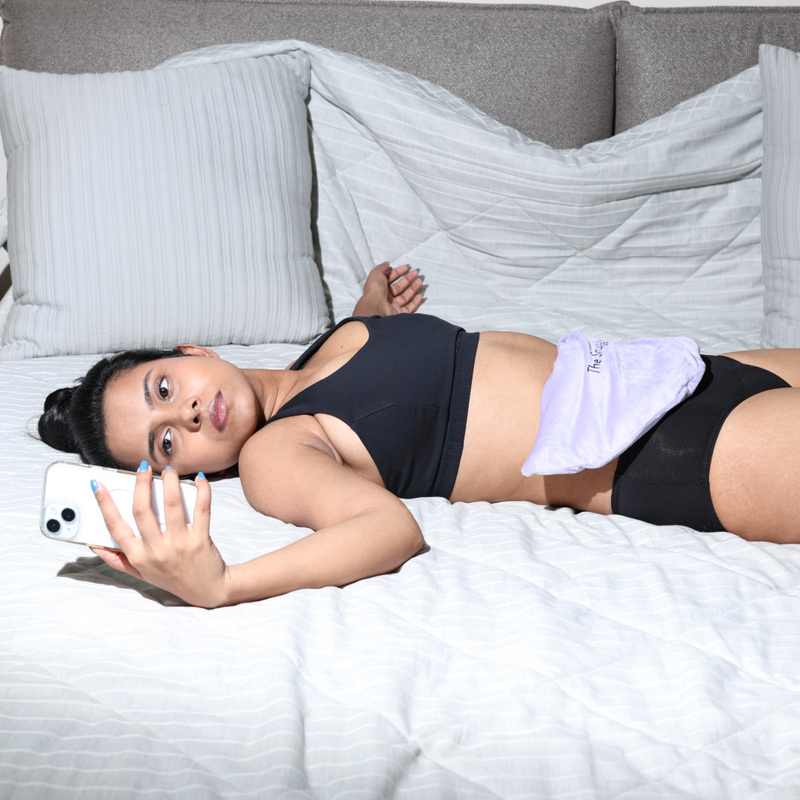

Community Spotlight: A period with PCOS
Living with PCOS (Polycystic Ovary Syndrome) can feel like an uphill battle – from unpredictable cycles to symptoms like weight gain & excruciating cramps. It’s a condition that impacts both the body and mind for millions of women!We sat down with a Nushu customer who knows these struggles firsthand—but also hacked her way into managing her symptoms like a pro!! 💜If you struggle from PCOS, dive into Sabana’s story of strength & patience – we promise you a wholesome, insightful read at the very least :) In conversation with Sabana Ahmed, 23, Guwahati (An English Major & Nushu Customer) 👉🏼Nushu: How did you discover you had PCOS? Sabana: I got my first period when I was in Class 10. After that, when I didn’t get my period for another 3-4 months, I knew something was wrong. When I went to a gynaecologist, she diagnosed me with PCOS. She had prescribed meds, which made my flow much heavier & much more painful! I bled for almost 3-4 weeks too! So I switched doctors & consulted my current gynac, who only recommended lifestyle shifts which ultimately helped! 👉🏼Nushu: What symptoms do you find the most challenging? Sabana: I experienced weight gain, extremely heavy bleeding and excruciating cramps. My flow is so heavy that when I used to use regular Stayfree pads, I would have to change every hour! The cramps were so bad that I wouldn’t be able to stand for more than 10 mins, I was literally bedridden for days. Now in the last 2 years, the duration of my period has come down to 6 days, is more regular than it used to be, and the first 3 days are heavy. The cramps aren’t as bad as they used to be either! 👉🏼Nushu: What lifestyle changes helped manage your symptoms? Sabana: I’ve been managing them for almost 10 years now, so since the beginning, I’ve experimented with a few diets that a lot of people recommend when managing PCOS. What worked for me honestly, was just maintaining a balanced diet. Many people say that if you have PCOS, you should avoid dairy products since they worsen inflammation. Or that you should avoid too many carbs. For me abstaining from any of these things never helped. I also realised that when I was consciously trying to abstain, at some point I would give in & then go overboard! So instead of abstaining. I always advocate & practice portion control. If I’m craving ice cream, I won’t stop myself, I will just have a bit of it. I personally need rice at least once a day. So I include it in my diet, but in control. My family has always been quite health conscious so it's fairly easy for me to maintain a healthy, balanced diet. 👉🏼Nushu: What prompted you to start using period underwear? How does it compare to other menstrual products you’ve used in the past? Sabana: I used to use the regular pads, and I would always get rashes with most brands. I also can’t wear a pad for more than an hour, which was super inconvenient and uncomfortable. I tried using the cups, but honestly it's just not for me. It's too uncomfortable to insert. I wanted something more comfortable, something that wouldn’t leak or give me rashes & I could wear longer! When I came across Nushu, it seemed to be a much better alternative, so I bought a few pairs! Honestly – best decision I made! 👉🏼Nushu: How does period underwear help with managing any heavy or irregular bleeding associated with PCOS? Sabana: I bought 2 Hip Huggers, 1 Lace Hipster & 1 Bikini Brief. They were so comfortable! Initially I was worried it would leak, so I kept checking the first 2 cycles. By the 3rd cycle I was confident I wouldn’t leak, and I never have. 👉🏼Nushu: Have you noticed any changes in your comfort or confidence levels? Sabana: Absolutely! I don’t have to worry about leaks and stains in public so that definitely makes me more confident when I step out on my period. I remember, I wore the Hip Hugger for about 12 hours, on my heaviest day too! By the end, it felt a bit bulky of course, but it didn’t leak or stain my clothes. I didn’t have to keep checking either. Period panties are definitely more convenient to use! The best part is, I can sleep in any position, without waking up in the middle of night, worried I’ve leaked or stained my sheets! 👉🏼Nushu: Would you recommend period underwear to others with PCOS? Sabana: Definitely! I know the feeling of managing PCOS symptoms. I would recommend it to anyone who bleeds in general, not just to someone with PCOS. If I’m able to wear 1 panty for 12 hours, I’m sure someone who does not suffer from PCOS could wear it for longer! 👉🏼Nushu: What advice would you give to someone with PCOS who is considering switching to period underwear? Sabana: It’s super comfortable & so perfect for heavy flow. As someone who has PCOS, I know that we also generate much more waste than a woman who doesn’t have PCOS. So it becomes all the more important to have a sustainable & comfortable option. 👉🏼Nushu: Has your experience with period underwear impacted your perspective on menstrual health & management? Sabana: Periods aren’t talked about a lot, but I think it’s great that more brands are building better solutions for women & as a result, sparking these conversations as well – this conversation itself makes me feel so heard!! Secondly, the waste generation perspective – it's not until you use a period panty do you realise how much waste you, and women around you, end up generating when bleeding! ---Navigating PCOS can be a challenging experience. 🥺While we’re no experts on PCOS (only a gynac can provide medical guidance), we can however offer you more comfort & a menstrual care solution that doesn’t leave you with more agony than you’re already batting! 🩸So go ahead & explore Sabana’s personal favourites – the Lace Hipster & Hip Hugger! 😇
Learn more
The Secret Life of Female Libido: Transitions Across Every Decade
It’s totally natural for your sex drive to ebb and flow over time! 🌊 As life rolls on, your libido can hit new highs or take a dip, thanks to causes like shifting hormones, a job switch, or a new relationship! Don’t expect a dramatic shift when you hit a new decade—libido changes tend to sneak up as you move from your 20s to your 40s and beyond. 🌻 🌪️What causes your sex drive to change? It seems like a straightforward question, but what makes a sex drive… drive(?) is still a mystery, even to scientists!! 😕 Hormones, yes, but other factors—psychological, social, and physical—also contribute to transforming your libido.✨Your 20s✨Your body is the most fertile from ages 25-30, which explains why your dating app swipe-range is ‘wide’💃🏽 Some scientists also believe that female desire increases as peak fertility wanes – so when you’re 29, going on 30! 👀✨30s and Early 40s✨Hitting 30 doesn’t mean your libido takes a plunge, but when your craving for physical intimacy starts to dip, blame it on your testosterone taking a little vacation! 🫠 Stress is a real buzzkill too, messing with your hormones by lowering testosterone and cranking up cortisol! 📈Plus, with life getting busier and responsibilities piling up, your sex drive might not be a priority. Kids!!!!!! 👶🏻No matter your age, pregnancy and childbirth can shake up your sex life in all sorts of ways.During pregnancy, hormonal and body changes could dial up your libido—especially in the second trimester—while at other times, it could take a dip. 🤰🏻Worries regarding the safety of sex during pregnancy, could bring hesitation. Post-childbirth, juggling childcare and the million other things on your plate impacts your time, energy, and interest in sex.✨50s and Beyond✨As you hit the “Golden Jubilee” mark, you might find yourself with an empty nest & fewer responsibilities, which could spark a renewed interest in sex. However, the closer you get to menopause, lower estrogen levels taper your libido! Throw in other menopause symptoms like hot flashes, anxiety, weight gain, and sleep trouble – sexy-time becomes the least of your worries. If you find yourself in this position, go easy on yourself, and allow your body to go through its natural phases. 💜 But there’s one thing to help, no matter what your age… ❗Keep the lines of communication open with your partner❗Talk about your needs, desires, and what feels good as your bodies change and life evolves. Trying new things can keep the spark alive, and honest conversations about what works for you both are key. Setting aside some special time for intimacy can also do wonders! Sources:https://www.webmd.com/sex-relationships/ss/slideshow-sex-drive-changes-agehttps://www.mayoclinic.org/diseases-conditions/low-sex-drive-in-women/symptoms-causes/sychttps://www.ncbi.nlm.nih.gov/pmc/articles/PMC4720522/https://www.researchgate.net/publication/325437603_Average_Associations_Between_Sexual_Desire_Testosterone_and_Stress_in_Women_and_Men_Over_Time
Learn more
Your birth control options (and exciting innovations!!!)
Contraceptives are a game-changer when it comes to taking charge of your reproductive health.💗We’re breaking down the pros and cons of some popular contraceptives you’ve probably heard about, plus a sneak peek at some cool new innovations on the horizon (finally!) 🥳But first things first—make sure you ❗chat with your gyno❗ before picking any of these, because, well, they know best! The Usual Suspects (other than male condoms) 💊Birth Control Pills These pills are the most popular contraceptives out there. Packed with hormones (either a mix of estrogen and progestin or just progestin)💉they work to prevent ovulation by altering your hormonal cycle (not exactly the healthiest option). The pill requires a prescription and good memory — they have to be taken at the same time every day.⌚➕Pros:- Effective when used correctly—around 91% success rate!- Helps regulate periods and ease cramps.- Can improve skin—hello, fewer breakouts!- Easy to get from a local pharmacy (granted you have a prescription).➖Cons:- Daily commitment—don’t forget!- Unnaturally manipulates your hormonal cycle- Potential side effects like nausea, weight gain, and mood swings. 👀 Intrauterine Devices (IUDs) IUDs are tiny, T-shaped devices that get placed in your uterus by a doctor. There are two main types to choose from: hormonal and copper. The hormonal ones release progestin to prevent fertilization, while copper IUDs create a hostile environment for sperm! ➕Pros:- Long-term protection—3 to 10 years, depending on the type.- Less than a 1% fail rate.- Low maintenance once it’s in place.➖Cons:- Might cause spotting or irregular bleeding at first - Copper IUDs can make your periods more intense.- Insertion can be uncomfortable.- There’s a rare chance it could fall out or move. 🩹 Contraceptive Patches The patch is like a sticker you slap on your skin—usually on your tummy, butt, or upper body! It releases hormones 💊 to prevent ovulation and needs a swap every week for three weeks, with one patch-free week during your period 🩸➕Pros:- Super easy to use—just change it once a week.- Regulates your cycle, just like the pill.➖Cons:- Might irritate your skin.- Alters your hormonal cycle.- Similar side effects to the pill.- Not easily available—mostly in hospital pharmacies. 🚺Female Condoms These are thin plastic pouches that line the vagina, giving you protection during sex. You can pop one in up-to 8 hours before the fun begins by guiding it into place with a flexible ring.⭕➕Pros:- Widely available – online too!- Offers protection against some STDs- Don't mess with your hormones!!!➖Cons:- Roughly a 21% fail rate.- Not reusable! What’s Next? While these options aren’t very enticing, there’s a silver lining! The world of 💥fem-tech is booming💥 & investments are finally flowing in!! The industry is expected to hit a whopping market value of $5 billion by 2033, growing at a solid 15.2% annually (according to a press release from Future Market Insights Inc). Here are some exciting innovations to look out for! 🤌🏽✨ 1. Vaginal Gel This one’s a cool development that’s already available across the US & UK. It’s non-hormonal too!! It works by keeping the vagina’s pH low, making it tough for sperm to survive (code for spermicide) ☠️ It comes in prefilled applicators and can be used up to an hour before sex—pretty neat, right? 🤯 2. Biodegradable Implants Biodegradable implants are small, flexible rods that release hormones like progestin (similar to the patches) to alter your hormonal & ovulation cycle. They eventually break down naturally in the body — no removal needed! 😮They’re still a WIP, so they’re not readily available in any markets just yet! 3. Male Birth Control Pills Yup, they’re finally working on a pill for the guys!!! Combining testosterone and progestin, these pills aim to suppress sperm production, offering a reversible option. 🤌 The side effects are similar to those of female birth control pills.They’re still undergoing clinical trials in the US & UK, so no luck on any approved pills yet 🤷🏻♀️ 😌Wrapping It Up Choosing the right contraceptive is a personal decision that depends on your health, lifestyle, and what you feel most comfortable opting for. With so many options available—and even more exciting ones on the way—women have more control over their reproductive health than ever before! 🎈🥳Just remember to always consult with your gyno to find what works best for you!
Learn more
Community Spotlight: Raksha Bandhan Edition
Every Raksha Bandhan celebration comes with the anticipation of gifts, but also the sweet feeling of sharing rakhis with our siblings and friends :) But ever seen a mom gift Rakhi-bracelets to her daughter? 😍 This time, we’re putting the spotlight on Archana, a Nushu customer & mom, who chose to forge a deeper friendship with her daughter (and introduce some kick-ass period care) through the 🎁Nushu Rakhi Gift Hamper! 🎁 In conversation with Archana Sridhar (42, and from Bangalore), who got the Rakhi Gift Hamper for her 14-year-old daughter, Aishi! 👉🏼Nushu: What does Rakhi mean to you? Archana: Just the feeling of bonding with your siblings & friends, I guess! 👉🏼Nushu: As a child, along with tying rakhis to brothers, would you tie rakhis to your sisters and friends as well? Archana: Honestly, I’m a south indian, so tying rakhis & celebrating Raksha Bandhan isn’t as big of a deal for us. But since most friends of mine would do it, my brother and I would celebrate it too! But yes, my friends and I would tie rakhis to each other as well. 👉🏼Nushu: Were gifts a ritual too? What gifts would you look forward to receiving? Archana: Absolutely! One of the reasons I would celebrate Raksha Bandhan is because I knew I would get new gifts! I’d look forward to the usual, you know - mostly earrings & other accessories… 👉🏼Nushu: What was your experience like when you first tried period underwear? Archana: When I was in school, pads were new. So my mom introduced cloth pads to me initially, which got me accustomed to washing them regularly. Later on, a few friends introduced me to silicon cups but I wasn’t very comfortable with the idea of it, so I never tried it. I wanted something cloth-based instead. So when I came across period underwear it felt very natural to go back to something similar. With pads - I know they are convenient since they’re disposable but they also come with so many health risks, like cervical cancer. I don’t know all of the medical details but I know they’re not the best for your health. With period panties - yes you have to wash it & maintain hygiene, but in the long run they are better. So I thought, I can try them for at least a couple of days and see how it works for me. It turned out to be so soft and comfortable! Even if they might be pricier (than pads), in the long run they’re definitely more beneficial! 👉🏼Nushu: So who did you purchase the Rakhi Gift Hamper for this year? What prompted you to get it for her? Archana: I got it for my daughter! Honestly, I think when we were teenagers, we would listen to our parents with more ease. Kids now are more resistant to what their parents suggest. So as parents you try new ways to forge a friendship with them! This hamper will hopefully forge a better friendship with her and since it also has other gifts in it that generally girls like – the scrunchie and the bracelets – it might nudge her to try the period underwear too! The panties are so comfortable, I just want her to try it once! 👉🏼Nushu: What’s your favourite part about the hamper? Archana: The hamper is a great way to introduce a great product to her. Of course I think it’s going to be a process for her to get used to it, but in the long run I prefer she chooses period underwear for its comfort and safety, over the convenience of pads. 👉🏼Nushu: Have you recommended Nushu to her/other friends before? Archana: Yes absolutely! But not everyone is open to it you know, so to each their own. When we launched the Rakhi Gift Box, the intention was to make gifting period underwear easy, to help fortify that friendship with a soul-sis easy! 💖 Little did we expect the hamper to help fortify the same friendship between a mother and her daughter 🥹 Go check out the Rakhi gift hamper if you haven’t already – we hope it makes for the perfect gift for your soul-sis, just like it did for Aishi :)
Learn more
Community Spotlight: All things Menstrual Health
Menstrual health is a basic and fundamental right to every woman who bleeds. Access plays a huge role but so does hygiene, diet and other aspects of health! So we spoke to Sreedevi, a Nushu customer, to understand how she approaches her menstrual health 🩸 Architect & Nushu-Community Member: Sreedevi Vishnu, Coimbatore 👉🏼Nushu: What is menstrual health to you? Sreedevi: I think having access to the right menstrual products is a huge part of menstrual health. I used to use regular pads & a lot of my friends were trying other options - cups & tampons, but that’s not something I found comfortable. For me it's also about hygiene. I found Nushu & the period underwear was extremely comfortable too. I don’t need to use anything else with it now - no pads, no tampons, no cups! It's also a lot of self care - when I’m bleeding I just take that one day off and rest it out. And a lot of me-time! 👉🏼Nushu: How do you go about your day when your flow starts? Sreedevi: I just ease the day out, and don’t step out much. I’m an architect and my job requires me to be on-field a lot, so on my first day I take that time for myself and don’t put strenuous pressure on myself. I also get a lot of cramps with my period, so my husband takes care of the kids so I can just rest. 👉🏼Nushu: Do you make any changes in your diet to manage PMS symptoms? Sreedevi: Not really, but of course I do have cravings so I try to order something sweet! I do maintain a healthy lifestyle in general so I consume a lot of nuts, veggies and fruits. There are certain nuts you can have at different phases in your cycle, so I maintain that throughout the month. I consume a lot of dry fruits leading up to my period too. I also drink fenugreek-seed warm water for my cramps, that really helps! 👉🏼Nushu: How does period underwear fit into your menstrual care routine? Sreedevi: I wanted to stop using pads, because we’re throwing away so much unnecessary waste. But I was also scared of using a cup, so I tried period underwear. I was a bit sceptical about it initially, but I heard stories from my grandmother about how they would use cloth. So I was curious to try it out. I ordered one first and tried it out, and I found it so comfortable, I didn’t feel any wetness. It was extremely comfy! I really like the fact that I didn’t feel any wetness. Even the washing - It felt icky at first, but it's actually really easy and quick. It takes the same amount of time to wrap and throw a pad and you’re coming in contact with your menstrual blood anyway! 👉🏼Nushu: Do you track your menstrual cycle? How has tracking your cycle helped you manage your menstrual health? Sreedevi: That’s not really a problem for me since my cycle is quite regular, so I know when my period is around! 👉🏼Nushu: How do you feel we as a society can better support menstrual health, conversations around it and reduce stigma? Sreedevi: So I’ve personally never had an issue discussing my menstrual health with family and friends, we talk about it quite openly, it's not taboo. I’ve also recommended Nushu to quite a few friends. But generally I think the ‘ick’ around washing is what deters quite a few people - so normalising that would really help. Honestly, the washing is not even as bad as it sounds! Menstrual Health can be a matter of access and personal health. While majority women in India do not have access to the right menstrual health products, it becomes our shared responsibility to make menstrual hygiene more accessible, but also ensure we do everything in our power to maintain prime menstrual health 💜 Try what Sreedevi tried, right here
Learn more
Breaking down Endometriosis
Endo is known for that excruciating pain condition that sometimes takes years to diagnose. Nearly 42 million women suffer from Endometriosis in India alone - that’s 1 in every 8 girls! Globally, that number is roughly 247 Million women. Yet, the causes (and permanent solutions) are still a global enigma to the general population as well as the medical community by far! What is Endometriosis? Endometriosis is a painful condition where endometrial-like tissue grows outside the uterus, often on the ovaries, bowel, and pelvic lining. This tissue responds to hormonal changes during the menstrual cycle, becoming inflamed and causing pain. The trapped tissue can lead to irritation, scar formation, adhesions (where tissues bind together), severe menstrual pain, and fertility problems. ⚠️What are the symptoms: Women often experience either some or all of these symptoms in varying degrees: -Pelvic pain: The most common symptom! - Painful periods and cramps: Occurs for 1-2 weeks around menstruation - Heavy menstrual bleeding: Can include bleeding between periods - Infertility: A significant complication for many - Pain during intercourse: Often experienced by those with the condition - Bowel discomfort: Painful bowel movements - Lower back pain: Can occur at any point during the menstrual cycle Regular gynaecological exams are crucial for monitoring symptoms and changes. 💭What causes Endometriosis? While the exact cause of this condition is unknown, the medical community has a few theories: Retrograde menstruation: Menstrual blood flows backward through the fallopian tubes into the pelvic cavity, which apparently several women experience! This is the oldest theory that exists 👀 Cell transformation: Parts of your abdomen tissues convert into endometrial-like tissue and act like endometrial cells too! They may even grow, thicken, and bleed over the course of your menstrual cycle in response to the hormones of your cycle. The reason? Unknown. (Welcome to the frustration of under researched women’s health 😩) Foetal Conditions: The Mullerian theory suggests that endometriosis might start in the foetal period with misplaced cell tissue that begins to respond to the hormones of puberty. Genetics and environmental toxins might also play roles in its development!! Some factors might make it riskier… 👉🏼Age: Women in their 30s and 40s are more susceptible than someone in their 20s! 👉🏼Family history: If a family member has experienced the condition before, you might be at a higher risk 👉🏼Pregnancy history: Although Endometriosis can still occur in women who’ve had children, women who have not, are at an increased risk (we get the frustration, really!) 👉🏼Menstrual history: Issues like shorter cycles, heavier and longer periods, or early onset of menstruation can increase risk 🩺How is it treated? It's natural to seek prompt relief from the pain and other symptoms of endometriosis; untreated endometriosis can significantly disrupt daily life. Although there is no cure for endometriosis, its symptoms can be managed 🌼 Initially, your doctor may suggest conservative treatments, moving to surgical options if there is no improvement. Using supplemental hormones prescribed by your gynac can sometimes help alleviate pain and halt the progression of endometriosis too! 💊 Laparoscopy, a minimally invasive surgery, is also used to both visualise and diagnose endometriosis. It is also used to remove displaced endometrial-like tissue. Lasers are a pretty commonly used non-invasive method to destroy this “out of place” tissue as well. Conclusion Endometriosis can be a painful, exhausting condition to live with, which not only deserves compassion, but also immediate medical attention! The sooner it's diagnosed, the better. If you suspect you have endometriosis (or even if something just feels off), it is ❗ suuuper important to visit your gynac immediately❗ Regular visits to the gynac can help detect medical conditions at a much earlier stage, when they can be treated with more ease 🌸 Sources: https://www.ncbi.nlm.nih.gov/pmc/articles/PMC7615030/ https://www.hopkinsmedicine.org/health/conditions-and-diseases/endometriosis https://www.ncbi.nlm.nih.gov/pmc/articles/PMC3935015/ https://www.healthline.com/health/gynecologic-laparoscopy https://www.healthline.com/health/endometriosis#treatment
Learn more
We need to talk: Is pain during sex really normal??
Pain during sex is much more common than you think – up to 75% of women experience it at some point. While some women may only experience occasional pain, others may deal with persistent discomfort. It's possible to experience pain and discomfort, even if you previously have not. 🙁 This mightttt just want you to avoid sex sometimes, but that’s not a solution, is it? That’s when you know it’s time to visit the gynac! 👩🏻⚕️ 😷 Addressing the Stigma Sexual health often carries a stigma that needs to be tackled. Recognising painful sex as something to be looked into, is Step #1 of tackling the stigma. Although pain during sex is common, it shouldn't be accepted as normal. Occasional minor soreness is usually not a concern, but persistent or intense pain warrants a conversation with your doctor. Sex should be pleasurable, girls! If it's not enjoyable anymore, discussing discomfort with your partner and doctor is important. Prioritise your sexual health, just as you would your physical or mental health! Common cause: Dryness Dryness is a frequent cause of painful sex, affecting women of all ages, though more common in perimenopausal and postmenopausal women. Dryness can also lead to infections, exacerbating the pain. 😖 The use of birth control, breastfeeding, and menopause are some of the most common causes of dryness down there! Solution? Easy – using a water-based lubricant can help significantly! 💦 Ensure that you and your partner engage in ample foreplay to get your body’s natural lubes working for you too ;) ❗Seeking Help ❗ Painful sex usually has an identifiable and treatable cause. If you're avoiding sex due to pain, it's time to see a doctor, with a gynaecologist being a good starting point for diagnosis. Many women are hesitant to discuss pelvic issues, but it's important to open up to friends, loved ones, and healthcare providers! 👩🏻⚕️ Women often blame themselves for sexual dysfunction, which can lead to delayed diagnoses in many cases. Recognizing it as a health issue, reducing the stigma around discussing sexual health, and seeking medical advice can help find relief and take much-deserved pleasure in sex! 💃🏻 Sources: https://www.cedars-sinai.org/blog/pain-during-sex.html https://www.healthline.com/health/dyspareunia#diagnosis
Learn more
Understanding your lady parts
The female anatomy often remains a mystery – even to us women 🥲 Our science textbooks and those hurried-through lectures in 7th grade might not have helped but hopefully, this article does :) Think of this article as a quick personal dictionary to your lady parts! 📖 Female anatomy includes both external genitals, known as the vulva, and internal reproductive organs like the ovaries and uterus. Interestingly, despite physical differences, all sex organs originate from the same group of cells during foetal (AKA fetal) development, with a baby’s biological sex determined at conception! So first, we’ll break down the external anatomy 🌸 The external female anatomy comprises the pubis and the vulva. 1. Mons Pubis: The mons pubis, or pubic mound, is the fleshy area on the pelvic bone– Basically, where your pubic hair typically grows! 2. Vulva: The vulva (which most of us have wrongly been calling vagina) includes several parts: 👉🏼Labia Majora: The fleshy outer lips on either side of the vaginal opening, usually covered with pubic hair 👉🏼Labia Minora: The inner lips situated inside the outer lips, varying in size and sometimes extending beyond the outer lips👉🏼Clitoris: The tiny button-like fleshy part, is located where the inner lips meet, at the top. It varies in size from person to person. While only the tip is visible, it has two shafts extending inside the body up to 5 inches! It contains millions of nerve endings, which explains why it works like magic when you’re gunning for an orgasm! 👉🏼Clitoral Hood: The fold of skin surrounding the head of the clitoris, protecting it from friction. 🌱Now, the Internal Anatomy Here comes your reproductive organs – we’ll make it super easy, promise. 1. Vagina Most women refer to their vulva as ‘vagina’ but the vagina is a canal connecting the vulva to the uterus. It averages 2.5 to 3 inches in length but expands during arousal. Glands located on either side of the vaginal opening, secrete lubrication to keep the vaginal tissues moist 💦 2. Cervix The cervix is the lower portion of the uterus, a cylindrical tissue separating the vagina from the rest of the uterus. It dilates during childbirth to allow the baby to pass through the vagina😯 3. Uterus The uterus, located in the middle of the pelvic cavity, is a muscular sac that houses the foetus during pregnancy. During the menstrual cycle, its lining thickens with blood in preparation for a fertilised egg. If pregnancy does not occur, the lining sheds, resulting in your period! 🩸 4. Fallopian Tubes The fallopian tubes connect the ovaries to the uterus. Eggs released from the ovaries travel down these tubes toward the uterus for potential fertilisation. An ectopic pregnancy, where a fertilised egg implants in the fallopian tube, is a medical emergency due to the risk of tube rupture ❗ 5. Ovaries The ovaries, egg-shaped organs about the size of almonds, are attached to the fallopian tubes on either side of the body. Most females have two ovaries that produce eggs and 2 suuuper important hormones – estrogen and progesterone. 🫧 (Check out our guide on hormones!) That’s it, folks! 🥳 The female anatomy is an amazing symphony of various organs working together for sexual function, reproduction, and hormone regulation. The shape and size of these organs vary naturally among women & each body might function slightly differently, maintaining regular exercise, diet and regular visits to the gynac are key to keeping your lady bits healthy and happy! 🍉 Sources: https://www.plannedparenthood.org/learn/health-and-wellness/sexual-and-reproductive-anatomy/what-are-parts-female-sexual-anatomy https://www.medicalnewstoday.com/articles/326898#breasts
Learn more
Why orgasms are your best friends on your period
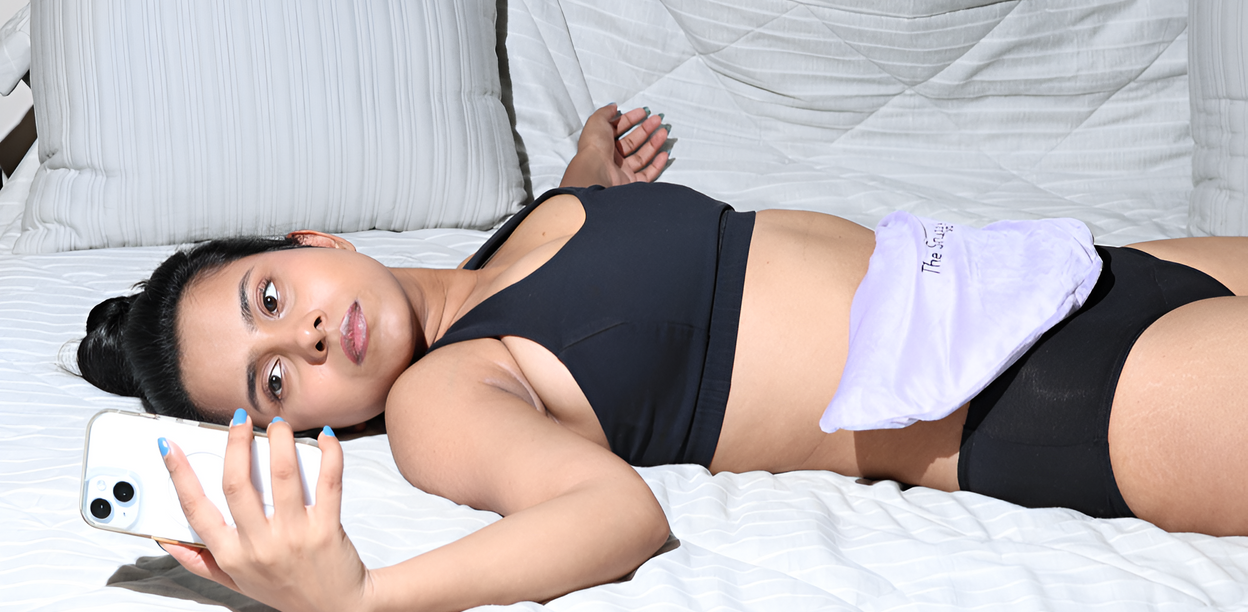
Engaging in sex (or solo) during your period isn't everyone's preference, and it can be socially taboo for some. But nature seems to have a different opinion!⚡ There's a reason women often feel more aroused during their period: research has shown that fluctuating estrogen levels can significantly boost libido. Following these natural urges can offer numerous benefits, potentially replacing the need for hot water bottles and painkillers. It's not just sex that provides relief; even masturbation can help. The key is reaching orgasm 😉 💦How can an orgasm alleviate period pain? When you orgasm, your body releases dopamine, which plays a role in pain processing in the brain. Dopamine acts as a natural painkiller by increasing pain tolerance! "Serotonin and dopamine are mood-enhancing hormones released during orgasm, which effectively alleviate menstrual cramps," says Dr. Aruna Kalra, an OB-GYN at CK Birla Hospital, in an interview with Health Shots. This means you can skip the chemical paracetamol and rely on your body's natural pain relief! Double win! Orgasms also boost blood flow, causing more blood to rush to the uterus, helping with cramps 💫 🗓️Apparently, they shorten your period too! Orgasms trigger the release of oxytocin, a hormone that controls uterine contractions. These contractions can help expel menstrual blood faster. Although no studies have confirmed this, some believe it’s likely that menstrual blood is pushed out during orgasms. Makes sense, right? 😌 🩸Not to mention - periods enhance orgasms! The benefits are reciprocal: while orgasms can ease period pain, menstruation can enhance orgasms. During menstruation, increased blood flow and circulation can boost arousal, sensitivity, and pleasure! 😴Some obvious benefits are better mood and better sleep! There's a scientific reason: sex ensures endorphins & melatonin are released, which lower our stress levels, enhance mood and help in a much better REM cycle. If you want to minimise the mess, we suggest wearing your sexiest period underwear (we have some options), and using a toy (or good old fingers!) to pleasure yourself against the fabric! 🪩 It’s the perfect setup for having your best orgasm of the month! It's fun, safe & a perfectly healthy way to spend some time with yourself 🥵 Happy menstruating ;) Sources: https://www.healthline.com/health/healthy-sex/masturbate-on-period#how-to-avoid-a-mess https://www.glamourmagazine.co.uk/article/how-orgasms-help-period-pain#:~:text=Orgasms%20also%20increase%20blood%20flow,better%2C%22%20Dr%20Kalra%20adds.
Learn more